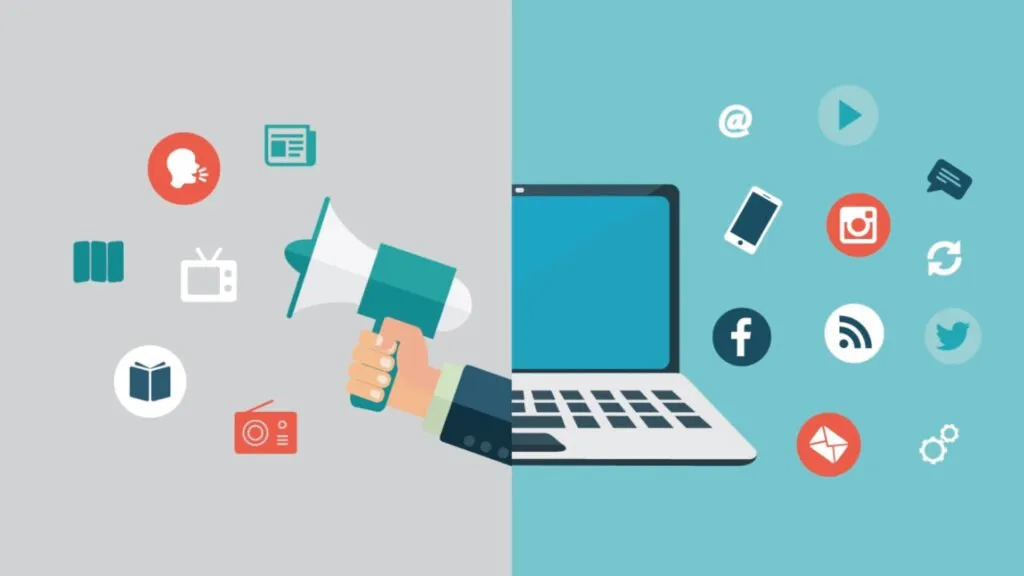

Marketing has always been about connecting with your audience at the right place and time. Traditionally, that meant reaching customers through TV, radio, print, or billboards. But in today’s fast-paced digital world, businesses have more powerful and measurable tools — thanks to digital marketing.
While both traditional and digital marketing aim to promote a product or service, the methods, reach, and impact are completely different. Let’s explore how digital marketing stands apart from traditional marketing and how strategies like on-page SEO and off-page SEO play an important role in boosting visibility.
1. Platform and Reach
Traditional marketing uses offline channels such as newspapers, magazines, flyers, radio, and television. These platforms reach local audiences and are great for building brand awareness.
Digital marketing, on the other hand, happens online — through search engines, social media, emails, websites, and apps. The internet gives you the power to reach a global audience instantly. Whether your customer is in the same city or across the world, online advertising makes it easy to connect and communicate in real-time.
2. Cost and ROI (Return on Investment)
One of the biggest advantages of digital marketing is its cost-effectiveness. Running a social media campaign or Google Ad costs much less than a full-page newspaper ad or TV commercial.
Traditional marketing involves high production and distribution costs, making it harder for small businesses to compete. Digital campaigns allow you to start with any budget and scale as you grow. Even better — digital platforms provide analytics that help you track performance and calculate ROI precisely.
To improve ROI, businesses often optimize their pages using on-page SEO techniques like keyword optimization, internal linking, and meta descriptions.
3. Targeting and Personalization
Traditional marketing casts a wide net — your TV or newspaper ad might reach thousands, but not all of them are your ideal customers.
Digital marketing allows laser-sharp targeting. You can reach audiences based on age, interests, location, or behavior. Personalization goes further — you can send customized messages, show relevant ads, and build stronger relationships.
For example, email marketing and retargeting ads help businesses connect with users who have already shown interest in their products or services.
4. Measurability and Analytics
In traditional marketing, it’s difficult to know how many people saw your ad or took action because of it.
With digital marketing, you get real-time data and insights. Tools like Google Analytics show exactly how many people viewed, clicked, and converted. This data-driven approach helps you refine your strategy for better performance.
You can also monitor off-page SEO metrics like backlinks, domain authority, and referral traffic using tools such as Ahrefs or SEMrush.
5. Engagement and Interaction
Traditional marketing is a one-way communication — businesses talk, and customers listen.
Digital marketing enables two-way interaction through social media, live chats, or comment sections. Customers can like, share, and message directly. This engagement builds brand trust and loyalty.
Platforms like Facebook Business, Instagram for Business, and LinkedIn Marketing help businesses communicate more effectively with their audience.
6. Speed and Flexibility
Traditional campaigns require long planning timelines — designing print materials or booking media slots. Once it’s live, changes are hard to make.
Digital marketing is fast, flexible, and dynamic. You can launch, test, and adjust campaigns instantly. If something isn’t performing, you can optimize it immediately without wasting time or money.
For instance, updating a blog’s keyword structure or meta tags (a part of on-page SEO) can quickly improve search visibility.
7. Longevity and Shelf Life
A print ad or billboard runs for a limited time. Once it’s gone, it’s gone.
Digital marketing content — like blogs, videos, or SEO articles — can bring visitors for months or even years. Evergreen content continues to attract leads long after it’s published, giving a better return on your investment.
You can also boost your website authority by building quality backlinks from relevant, high-domain sites — a crucial part of off-page SEO.
Final Thoughts
Both traditional and digital marketing have their strengths. Traditional marketing builds offline brand credibility, while digital marketing provides better targeting, measurement, and engagement.
However, as consumer behavior continues to move online, investing in digital marketing and strong SEO strategies (both on-page and off-page) is essential for business growth.
If you want to grow your brand visibility and get measurable results, explore Digipixeline’s digital marketing services — designed to help your business reach the right audience with the right message.