
How digital marketing
differs from
traditional marketing.
Different channels. Different strengths. One question that matters: how do you connect with the right people?
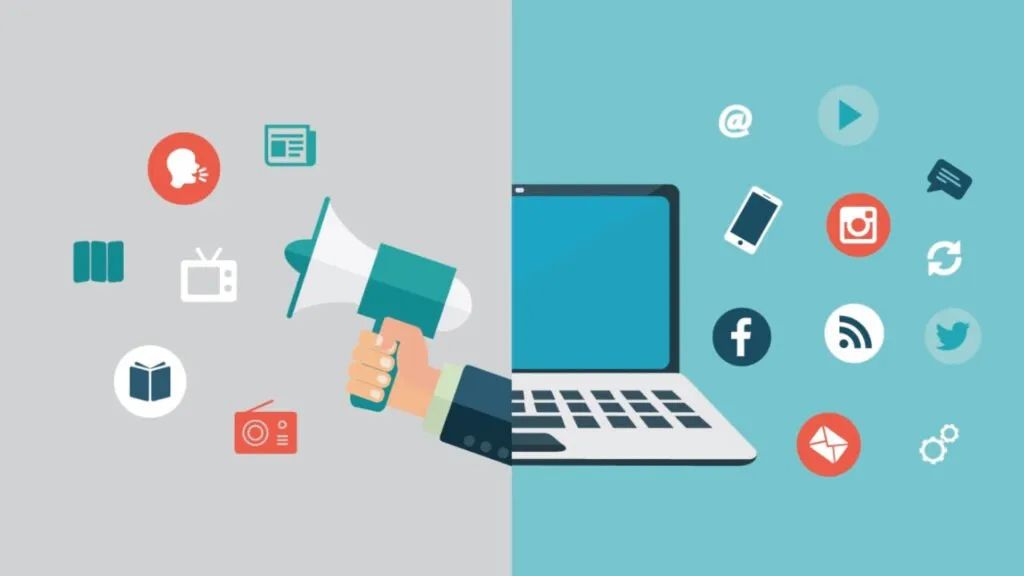
Choose channels around your audience and objective. Digital and traditional marketing can work together when the message, customer journey and measurement are connected.
Start with the business goal.
Before you choose a platform, decide what you want people to do. Discover your business? Visit your store? Book a consultation? Buy a product? A channel only becomes useful when it supports a clear objective.
Traditional marketing includes print, radio, television and outdoor advertising. Digital marketing includes websites, search, social media and email. Both can introduce a brand and influence a decision, but they offer different ways to reach people and learn from their response.
The right choice depends on your audience, location, resources and offer. A local business may need a different mix from an online store serving customers across the country.
Where the conversation happens.
Offline media can put a message into someone’s daily surroundings: a newspaper they read, a route they travel or a programme they watch. Reach depends on where that medium is distributed and who pays attention to it.
Online channels give people several routes into your business. Someone may find an answer through search, notice a social post, explore your website and return later through an email. Each touchpoint should help them understand what you offer and what to do next.
A click is a moment.
The customer journey is bigger.
A person may see your signboard before searching your name. They may discover your brand online before visiting your store. Plan for those connections.
The differences at a glance.
These are practical tendencies, rather than fixed rules. The details change with the channel, campaign and audience.
| Consideration | Traditional | Digital |
|---|---|---|
| Placement | Print, broadcast and physical locations. | Search, websites, social platforms and email. |
| Audience | Often shaped by publication, programme or location. | Can be shaped by search intent, context and available audience controls. |
| Changes | Printed or booked placements may be difficult to revise. | Many formats allow edits and testing after launch. |
| Response | May involve a call, visit, survey or tracked offer. | May involve a click, enquiry, purchase or direct conversation. |
| Costs | Production and placement costs vary by medium and reach. | Creative, media, technology and management costs all matter. |
| Measurement | Can use unique codes, tracked calls and customer feedback. | Can use event data and analytics, with tracking and attribution limits. |
Measure what matters.
More data does not automatically mean a better decision. Choose measures that fit the goal. For an enquiry campaign, look beyond the number of leads to whether they match your service and turn into useful conversations.
Digital reporting can help you understand activity, but it is not a complete record of every customer interaction. Consent choices, missing tracking, different devices and offline decisions can leave gaps. Use platform reports alongside your own enquiry and sales records.
Offline campaigns can also be measured. A dedicated phone number, a unique offer code or a simple “How did you hear about us?” question can add context. No single measure tells the whole story.
Start with the outcome you need.
Then choose the signals worth tracking.
Make the channels work together.
A consistent message helps people recognise your business wherever they encounter it. Keep your offer, contact details and visual identity aligned across your website, profiles, printed materials and campaigns.
- NoticeA local poster or social creative introduces the business.
- ExploreA search or website visit answers the first questions.
- ConnectA clear contact option makes the next step easy.
For example, a printed promotion can lead to a focused landing page through a QR code. The page should explain the same offer, work well on mobile and make the relevant action easy to find.
Keep the plan manageable. A few well-connected touchpoints are easier to maintain than a long list of channels with no clear owner or purpose.
Choose a useful starting point.
Review what you already have before adding more activity. Is your offer clear? Can customers find accurate information? Does your website answer the questions that come up before an enquiry?
- Define one priority. Choose the business outcome you want to improve.
- Understand the audience. Identify where people look for information and how they decide.
- Connect the experience. Make the transition from discovery to enquiry straightforward.
- Review and adjust. Use feedback and relevant measures to decide what to improve.
Your marketing mix can evolve as you learn. If you need help connecting your strategy, website and campaigns, explore Digipixeline’s services or tell us about your next project.
From the Digipixeline journal
Perspectives on marketing, websites and the connections between them. This refreshed edition revisits our original article published on 27 October 2025.
Get to know Digipixeline ↗